「この症状に効く!漢方薬ナビ」シリーズ第4回:八味地黄丸
シリーズ第4回は、年齢とともに気になる「足腰の冷え・痛み」や「トイレの悩み」をサポートする漢方薬、八味地黄丸をご紹介します。
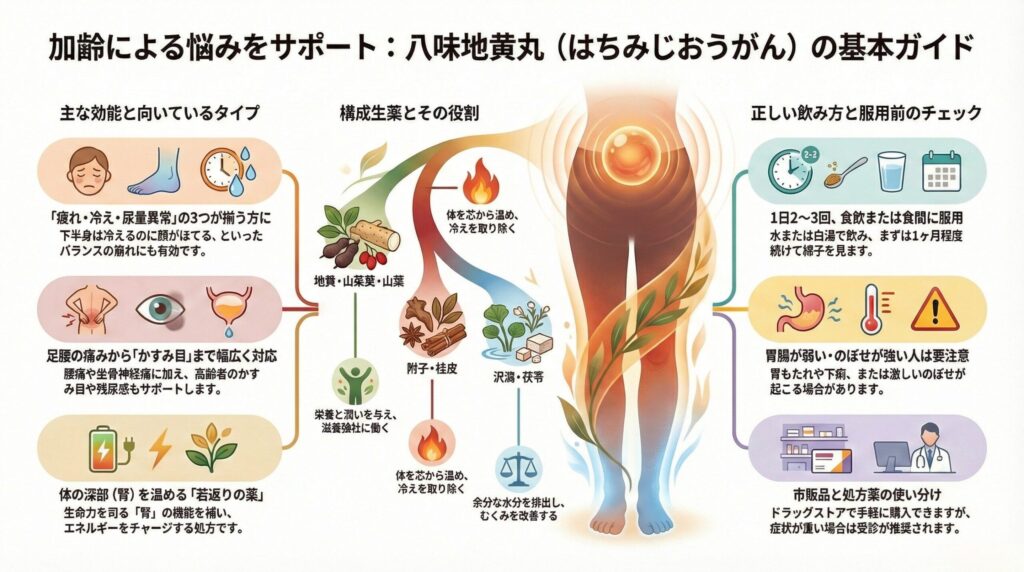
🐢 八味地黄丸ってどんな漢方? 八味地黄丸(はちみじおうがん)は、体を温めて水分代謝を改善し、「腎(じん)」の機能(生命力・泌尿器・生殖器など)を補う漢方薬です。 特に、「下半身は冷えるのに、顔はほてる」 というようなバランスの崩れや、加齢による機能低下(疲れやすさ、目のかすみ)によく使われます。別名「若返りの薬」とも呼ばれることがあります。
🔍 どんな症状に向く?
- 足腰の冷え・痛み・しびれ(腰痛、坐骨神経痛など)
- トイレの悩み(夜間頻尿、残尿感、軽い尿漏れ)
- 高齢の方のかすみ目
- 疲れやすく、手足が冷えやすいとき
- ポイント: 「疲れやすい」「手足が冷える」「尿量異常(多い・少ない)」の3つが揃う人に特に向いています。
🧾 主な生薬(代表例)と作用イメージ
- 地黄(じおう) — 腎を補い、栄養と潤いを与える(主役!)
- 山茱萸(さんしゅゆ)・山薬(さんやく) — 滋養強壮、体を元気にする
- 附子(ぶし)・桂皮(けいひ) — 体を芯から温め、冷えを取り除く
- 沢瀉(たくしゃ)・茯苓(ぶくりょう) — 余分な水分を排出し、むくみを取る
- (これら8つの生薬が協力して、体を温めながら水分バランスを整えます。)
💊 用法(一般的な目安)
- 市販のエキス顆粒や丸剤(小さな黒い玉)は、通常 1日2〜3回 に分けて服用します。
- 食前または食間に、水または白湯で飲みます。
- 慢性的な症状(腰痛や頻尿など)に使われることが多いため、1ヶ月程度 続けて様子を見ることが一般的です。
⚠️ 注意点・併用で気をつけること
- 胃腸が弱い方: 地黄(じおう)という生薬は少し胃に重たいため、食欲不振や下痢を起こすことがあります。胃が弱い方は医師・薬剤師に相談してください(「牛車腎気丸」などに変更する場合もあります)。
- のぼせが強い方: 体を温める力が強いため、極端に暑がりな方や、赤ら顔でのぼせが強い方には向かないことがあります。
- 妊娠中の方: 附子(ぶし)などが含まれるため、自己判断での服用は避け、必ず医師に相談してください。
🏪 市販品・病院処方の違い
- ドラッグストアでも「夜間頻尿の薬」「腰痛の漢方」として多くのメーカーから販売されています(丸剤タイプも人気です)。
- 病院処方では、体質に合わせてより細かい調整ができるため、症状が重い場合は受診をおすすめします。
👩⚕️ 最後に 八味地黄丸は、単なる「痛み止め」ではなく、体の深部(腎)を温めてエネルギーをチャージする漢方です。 「最近、足が冷えてトイレが近いな…」と感じたら、年齢を問わず試してみる価値があります。ただし、胃腸の調子を見ながら無理なく続けてくださいね。
📝 まとめ(早見表)
| テーマ | 八味地黄丸(はちみじおうがん) |
|---|---|
| 主な適応 | 足腰の冷え・痛み、夜間頻尿、かすみ目、高齢者の疲れ |
| 飲み方の目安 | 1日2〜3回。慢性症状には1ヶ月程度継続して様子を見る |
| 注意点 | 胃腸が弱い人は注意(胃もたれ・下痢)、のぼせが強い人は不向き |
| 市販/処方 | 顆粒や丸剤で広く市販されている。胃腸虚弱なら相談を |
Herbal Medicine Guide Vol. 4: Hachimi-jio-gan (Eight-Flavor Rehmannia Pill)
In the 4th installment of our “Herbal Medicine Guide for Specific Symptoms,” we introduce Hachimi-jio-gan, a Kampo medicine that supports concerns that come with age, such as “coldness and pain in the lower back and legs” and “urinary troubles.”
🐢 What is Hachimi-jio-gan?
Hachimi-jio-gan (Eight-Flavor Rehmannia Pill) is a Kampo medicine that warms the body, improves water metabolism, and supplements the function of the “Kidney” (which in Kampo represents vitality, urinary system, and reproductive system). It is especially used for imbalances such as “cold lower body but hot flashes in the face,” and functional decline due to aging (fatigue, blurred vision). It is sometimes referred to as a “rejuvenation medicine.”
🔍 Suitable Symptoms
- Coldness, pain, or numbness in the lower back and legs (back pain, sciatica, etc.)
- Urinary troubles (frequent urination at night, residual urine sensation, mild urinary incontinence)
- Blurred vision in the elderly
- When you get tired easily and your hands and feet feel cold
- Key Point: It is particularly suitable for people who possess all three traits: “easily tired,” “cold hands and feet,” and “abnormal urine volume (too much or too little).”
🧾 Main Herbal Ingredients (Examples) & Action Image
- Rehmannia Root (Jio): Supplements the “Kidney,” provides nutrition and moisture (The main ingredient!).
- Cornus Fruit (Sanshuyu) & Chinese Yam (Sanyaku): Nourishes and tonifies, energizes the body.
- Aconite Root (Bushi) & Cinnamon Bark (Keihi): Warms the body from the core and removes coldness.
- Alisma Rhizome (Takusha) & Poria Sclerotium (Bukuryo): Drains excess water and relieves swelling.
- (These 8 herbs work together to warm the body while regulating water balance.)
💊 Dosage (General Guideline)
- Commercially available extract granules or pills (small black balls) are usually taken 2 to 3 times a day.
- Take with water or warm water before or between meals.
- Since it is often used for chronic symptoms (such as back pain or frequent urination), it is common to continue taking it for about one month to observe the progress.
⚠️ Precautions & Drug Interactions
- Weak Stomach: The herb Rehmannia (Jio) can be heavy on the stomach and may cause loss of appetite or diarrhea. If you have a weak stomach, please consult a doctor or pharmacist (They may switch you to “Gosha-jinki-gan” etc.).
- Strong Hot Flashes: Since it has a strong warming effect, it may not be suitable for people who are extremely sensitive to heat or have strong hot flashes with a red face.
- Pregnancy: Since it contains Aconite (Bushi), avoid taking it based on self-judgment and always consult a doctor.
🏪 Over-the-Counter vs. Prescription
- It is sold by many manufacturers in drugstores as “medicine for frequent urination at night” or “Kampo for back pain” (pill types are also popular).
- Prescriptions at hospitals allow for finer adjustments tailored to your constitution, so if symptoms are severe, we recommend visiting a clinic.
👩⚕️ Final Note
Hachimi-jio-gan is not just a “painkiller” but a Kampo medicine that warms the deep part of the body (Kidney) and charges energy. If you feel, “Recently, my feet are cold and I go to the toilet often…”, it is worth trying regardless of age. However, please continue taking it reasonably while monitoring your stomach condition.
📝 Summary (Quick Reference)
| Theme | Hachimi-jio-gan |
|---|---|
| Main Indications | Cold/pain in lower back & legs, frequent urination at night, blurred vision, elderly fatigue |
| Dosage Guide | Generally 2-3 times/day. Continue for about 1 month for chronic symptoms |
| Precautions | Caution for weak stomach (heaviness/diarrhea), unsuitable for strong hot flashes |
| OTC / Rx | Widely available as granules or pills. Consult if you have a weak stomach |